How do you make a bike obstacle course so difficult that the best riders in the world can't do it? Red Bull seems to have cracked the code. First, you float it over water, so there's always some wiggling going on. Then you make the true course as narrow as possible. That way, if you waver, deviate, or fall, you can't just get back up because you're in the water (and so is your bike). They tested this ridiculous obstacle course with a bunch of BMX pros, with results that can be described as pratfalls. It's a good thing they had a boat ready to fish riders and bikes out of the lake.
Then they challenged renowned cyclists Danny MacAskill and Kriss Kyle. These are the guys who will try it over and over again until they succeed, no matter how exhausted they get. Or until it gets too dark to try. But can they finish it? -via Laughing Squid

When you think of a "uterine exorcism," which you most likely have never thought about before, you might come to the conclusion that it's a euphemism for abortion. It's not. The euphemism for that was “menstrual regulators,” meaning concoctions that caused an abortion. No, uterine exorcism was exactly what it sounds like.
In the days before modern medicine, anything that ailed a woman could be blamed on her uterus. It was a mysterious organ that couldn't be explained, and many learned men thought it could wander about the body and dehydrate a woman through her liver or suffocate her by invading her lungs. One treatment for a wandering uterus was to lure the organ back to the pelvis by putting honey on a woman's pelvis, while making the woman smell something awful in order to scare the uterus into returning to its proper place. If that didn't work, the last resort was to call in the priests to perform an exorcism. A 10th-century addition to a 9th-century medical manual contains an invocation for such a ritual. Read about wandering wombs and uterine exorcism at Dirty Sexy History. -via Strange Company
Many years ago, I was running a radio contest and was looking for the 9th caller. I picked up the phone, and said "KD99, you're caller six!" and the phone said, "Hello! This is Miss Cleo!" It was a robocall and I hung up, but later joked that if she were a real psychic, she would have been caller #9.
Miss Cleo was everywhere back then, especially if you ever turned a TV on. Her persona was delightful, but actually calling her could cost you big time. Simon Whistler (previously at Neatorama) explains where Miss Cleo came from, where she went, and how much money was made in her name in between.
On another note, Whistler mispronounces Tammy Faye Bakker in this video, which reminds me of Chill Dude Explains. It's common for people to mispronounce names they've never heard before, but one commenter took it as evidence that Dude might be an AI voice. Whistler is not, but is likely to be unfamiliar with Bakker. I remember the 20th century, but I looked up the pronunciation anyway. Google's AI search assistant says it's "Backer" for Tammy Faye and "Baker" for Jim. So Whistler is doing his research, but relying on AI for accurate information is a losing game.
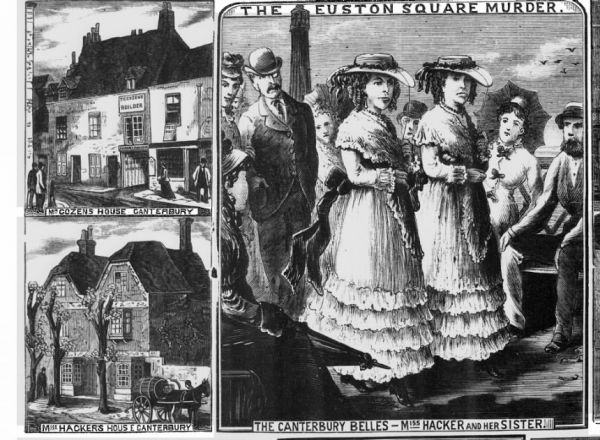
The Illustrated Police News was an early British tabloid that sold sensational crime stories with often lurid illustrations between 1842 and 1938. One has to wonder how many times they were sued for defamation in the age of not-so-meticulous fact checking.
In 1877, wealthy but miserly Matilda Hacker left her home in Canterbury due to unpaid taxes. She changed her surname to Huish and moved into a rooming house in London at Euston Square. She was only there, or, more correctly, only in her room for a couple of months before moving out, according to the maid Hannah Dobbs. Two years later, Hacker/Huish's body was found in the basement. Dobbs was arrested for murder, but the case against her was only circumstantial, so she was acquitted. But the way the case was reported in The Illustrated Police News led to a lawsuit that uncovered more than anyone involved thought possible. Read the story of the maid, the landlord, and the murder at Strange Company.
Remember when you found out that Foghorn Leghorn was a parody of a human radio character that would have been familiar to the original audiences of the 1940s? That was just one of many pop culture references in Warner Bros. cartoons that eventually lost connection with its source material because those cartoons still hold up almost 100 years later.
The one comedy impression that was used more than any other, however, came from a classic novel. So many students read Of Mice and Men in high school and said, "Wait a minute, this is a cartoon character!" Even more so if you ever eventually watched the 1939 film version starring Burgess Meredith and Lon Chaney Jr. Your cartoon experience made it hard to take the tragic story seriously. And even if you knew that, you might not be remembering the same cartoon character as the next person, because it was used so much, from 1940 up to the '60s.

Matthew Dockrey is an engineer in Seattle. He loves to build and ride bicycles, but his rides are often thwarted by the lush greenery of that region. As an engineer, he's using his head to find a solution.
Dockrey mounted an electric string trimmer on a bicycle helmet. As he rides, the trimmer cuts overhead branches (well, small ones) that obstruct his travel. He calls the task "guerilla urban landscaping."
The helmet's control mechanism is hooked into a dead man's switch mounted on the handlebars, so he must actively press a button to spin the trimmer. As you can see in this video, the setup is quite effective.
-via Hack A Day

A microbiology professor at a university in Utah gave his students a microbe to identify. The lab instructor expected most of the results, at least from the better students, to come back as the common bacteria Plesiomonas shigelloides. None did. Instead, after studying the microbe's morphology and running chemical tests, they identified it as Neisseria meningitidis, which causes meningitis and other deadly infections. And it can be spread through the air. Checking the storage freezer, they found a vial of N. meningitidis, which shouldn't have been there, as well as P. shigelloides.
As a result, 32 of the 33 students, teachers, and lab workers present were given an antibiotic regimen, and two even had spinal taps! Some of them had been vaccinated for meningitis, which is recommended for college students. An investigation from the state's public health department followed, as well as one from university officials wondering how this happened. In the end, no one came down with a serious illness, but many procedural violations were unearthed. Read the whole story at Ars Technica. -via Damn Interesting
(Image credit: CDC)

I follow Zillow Gone Wild on X because it has weirdly customized homes that make for good blog content. But even that account (and TV show) isn't sure what to make of this home in northern Colorado. We have only external photos because the people selling the house don't have access to the interior or are too disturbed by what's inside. Here's the description:
Attack of the Killer Tomatoes was a 1978 spoof of the low-budget monster movies of the 1950s and '60s. It was cheaply made and critically panned, but made back five times its budget. The movie became a cult classic, and spawned several sequels. Almost 50 years later, it's time for a remake!
Attack of the Killer Tomatoes: Organic Intelligence is the updated 2026 version. It premiered with a showing in February at the USS Midway Museum in San Diego. The movie is scheduled for a limited release in New York, Los Angeles, Chicago, and San Diego on August 7, 2026, obviously so it can qualify for the Razzies. After that we expect it to be on YouTube soon. The timing of the release coincides with tomato harvest season. The scenes from this teaser reminds me of the tomatoes I have on my counters, in my windows, in my refrigerator, and even the freezer. -via Geeks Are Sexy
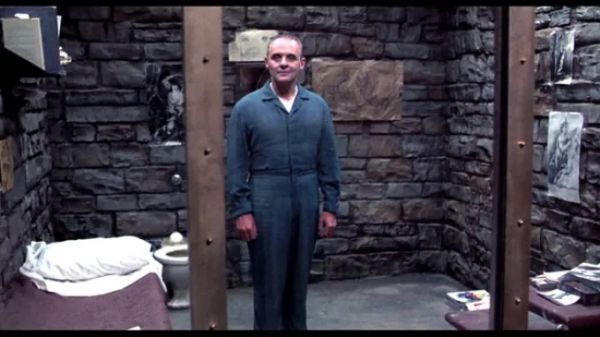
In The Silence of the Lambs, the murderous cannibal Hannibal Lecter was confined to a cell in the basement of a mental asylum because he was so dangerous. It was made of bulletproof glass instead of bars, because he had managed to kill someone through bars already. It was eerie to see, but a similar cell had already been constructed years earlier for a real-life killer named Robert Maudsley.
Maudsley's cell was custom-built for him at Britain's Wakefield prison in 1983. The glass was so two guards could keep an eye on Maudsley 24 hours a day. Besides a sink and toilet bolted to the floor, his furniture was made of compressed cardboard so that he couldn't make a weapon from it. He was kept there in solitary confinement for more than 40 years because he was so dangerous.
The reason Maudsley was considered so dangerous was because he killed four people, three of them after he was imprisoned for the first! He got the nickname "Hannibal the Cannibal" because it was said that one victim was found with his skull crushed, and a spoon in his brain. That wasn't exactly true, and there is no evidence that Maudsley was a cannibal. Yet the crimes he was convicted of were so horrific, he couldn't be housed around other inmates. They are described in detail at Utterly Interesting.
Going into the Honest Trailer for The Mandalorian and Grogu, I realized I didn't know anything about the movie because its promotion was kind of lackluster and after it opened, no one talked about it at all. Oh yeah, it made money, because that's what Disney does, but it performed more poorly than any Star Wars movie since Disney bought the franchise. Critics were "meh, it's okay." Screen Junkies is here to show us why.
Today I found out this movie continues the Disney habit of resurrecting favorite characters, in this case dead aliens, by putting new characters in the old CGI suits, first with Grogu and now with Jabba the Hutt, whose offspring are both heroes and villains. Also, Grogu learns to speak English, a skill that Yoda never mastered. And, of course, there's a lot of killing with no blood. The Mandalorian and Grogu is now available for digital download, and goes on sale on home media August 25th.

As early as the first century BC, industrial workers in China's Sichuan Province were building derricks for wells, but they weren't drilling for oil. While most of the world got salt from ocean water or mines, Sichuan has salty aquifers underneath, and they built wells to bring this brine to the surface. They developed percussion drilling, which harnesses gravity power and patience, but will eventually reward you with salty water. And natural gas.
It took hundreds of years to perfect the technology, but by 1835, they had drilled a well more than a kilometer deep near the town of Zigong. They also developed a method to harness the natural gas released, piping it to factories and using it to power the boilers that extracted salt from the brine. Pictures of the tall derricks of Zigong inspired American George Bissell to drill for oil in the United States in the 19th century. Read about the ancient salt wells of Zigong at Amusing Planet.
(Image credit: Phreakster 1998)
 p
p
Let us praise David Cifaldi, a 32-year old nurse who was hiking up Granite Peak--the tallest peak in Montana. KTMF 12 News reports that Cifaldi was about 10 miles into the hike when he was accidentally impaled with a hiking pole.
As a medical professional, he was able to make a rational judgment about how to proceed. Would he be able to return under his own power? Cifaldi decided that he could. So, escorted by his friends, he hiked 10 miles over 6 and 1/2 hours to return to the trailhead and be driven to a hospital.
YouTuber Limba Trip is creative maker of things, mostly hand-made zoetropes, anamorphic images, and music. One of his zoetropes that has gone viral shows ants dancing on a plate.
In this time-lapse video, Limba Trip draws each ant carefully by hand. When the plate is spun, the animated effect is mesmerizing.
-via The Awesomer
In the wild, many gray squirrels die in infancy, and those who survive can live to about six years on average. Thumbelina almost died in infancy. She was only a couple of hours old when her nest was destroyed, but this family took her in. That was ten years ago. Thumbelina is well adjusted to being an indoor squirrel, but she's got some problems in her old age. She developed polycystic ovarian syndrome, which causes her to gain weight easily, and left her quite round. She has also lost teeth, which means her family has to not only strictly measure her food, but puree it as well.
How much effort is too much for a pet squirrel? Thumbelina's family doesn't seem to mind at all, even though they've gone to extraordinary lengths for her. She's got quite a personality and brings them joy. You can see more of Thumbelina at Instagram.